
Jason Arday found dead
Jason had become the youngest Black professor in Cambridge’s history.
Jason Arday found dead
The former professor resigned from the University of Cambridge last week stating that he needed ‘time to heal’ but that it was ‘not the end of his work.’
STORY BY MELISSA SIGODO
AUGUST 14, 2026
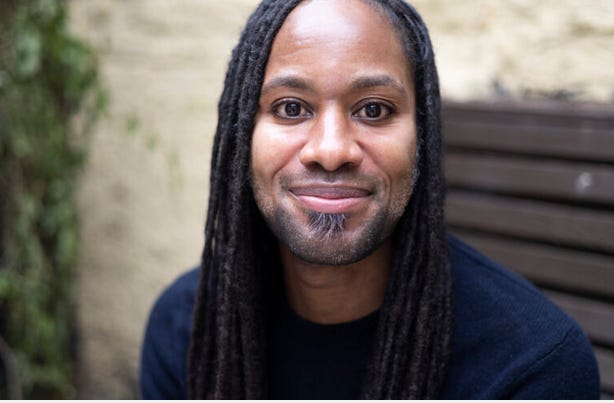
Jason Arday has been found dead aged 41.
The Metropolitan police says the former professor was found "unresponsive" at an address in Battersea in London on Friday afternoon.
A spokesperson for the force said: “Sadly, a 41-year-old man was pronounced dead at the scene.
“His next-of-kin have been informed and are being supported by officers.
“At this time his death is being treated as unexpected, but is not believed to be suspicious.
"The case is being investigated by officers from the Met's Central South Command Unit. A file will be prepared for the coroner.”
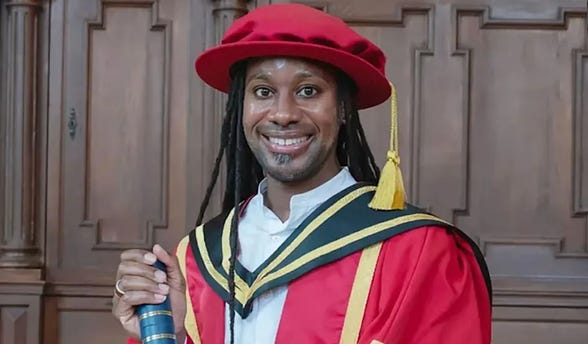
Jason had recently become the subject of sustained media coverage which investigated his qualifications and charitable achievements, as well as his life story of being diagnosed with autism and not learning how to speak till he was 11.
Reports had initially been sparked by accusations of plagiarism which he was cleared of by Liverpool John Moores University.
Media commentary took aim at diversity, equity and inclusion policies in light of questions surrounding the youngest Black professor at Cambridge which made front pages and international news.
On August 5, the academic released a letter of resignation from the University of Cambridge through non-profit organisation the Good Law Project who had ‘campaigned in solidarity’ with him alongside several public figures.
His Resignation letter.
Dear colleagues,
It is with profound sadness that I write to resign, with immediate effect, from my position at the University of Cambridge and Jesus College.
When I accepted the extraordinary honour of becoming Professor of Sociology at Cambridge, it was, without question, the greatest professional privilege of my life. To become the youngest Black professor in the University’s history was something I could scarcely have imagined as a child growing up with a diagnosis of autism, unable to speak until I was eleven years old.
The response from so many people across the world was overwhelming. Thousands celebrated not simply my appointment, but what it represented: that talent, perseverance and hope can triumph over even the greatest adversity. It has been the privilege of my life to teach my students, to learn alongside them, and to witness their curiosity, kindness and ambition. They have given me far more than I could ever have given them.
Sadly, the years since my appointment have also been marked by an unrelenting level of public scrutiny and personal attack. While criticism is an inevitable part of academic life, what I have experienced has gone far beyond scholarly disagreement. The relentless accusations, speculation and public commentary have taken a profound toll on me and on those I love.
I have tried to continue because I believe deeply in the values of higher education, in rigorous scholarship, and in the transformative power of universities. I have tried because of my students, my colleagues and the countless people who have written to tell me that my journey gave them hope.
But there comes a point when the personal cost becomes too great.
I have a family. I want to be present for them. I want to reclaim some peace, some privacy and some semblance of an ordinary life. I no longer wish to feel as though I am living under a constant spotlight, where every aspect of my life is subject to public examination and judgement.
For my own wellbeing, for my family, and for those who have stood by me throughout this difficult period, I have concluded that the only way to bring this chapter to an end is to step away.
This decision should not be interpreted as a loss of faith in scholarship or in the values that first brought me to Cambridge. Nor should it be mistaken for an acceptance of the narratives that have surrounded me. It is simply the decision of someone who has reached the limits of what any person should reasonably be expected to endure.
To my students: thank you. Teaching you has been the greatest honour of my academic career. Your brilliance, compassion and determination give me enormous hope for the future.
To my colleagues and to the many thousands of people, from every corner of the world, who have supported me, defended me, written to me, and believed in me when it mattered most, I offer my deepest gratitude. Your kindness has carried me through some of the darkest moments of my life.
This is not the end of my work. It is simply the end of this chapter.
I need time to heal. I need time to simply be myself again.
And when that time comes, I will return.
I will return stronger, wiser and with the same determination that has always defined my journey. There is still so much work to do, and I look forward to doing it alongside so many of you in the years ahead.
For now, however, I ask only for understanding, for compassion, and for the space to begin again.
With gratitude,
Professor Jason Arday
So sad and so sorry